
SDIA Network eNews
The Susila Dharma Network eNews
English | Español | Français
No. 74 : January 2012
SDIA web site

Top

Millennium Development Goals

MDG #6 — Combat HIV/AIDS, malaria and other diseases

Mosquitos on a bed net (© World Malaria Day)

This is the last in our series on the MDGs, eight goals that were adopted by world leaders in the year 2000 in a global effort to reduce extreme poverty. This issue features goal number 6 which tries to tackle the major diseases which needlessly kill so many people around the world.

The goal is broken down into three main targets:

  1. Halt and begin to reverse the spread of HIV/AIDS
  2. Achieve, by 2010, universal access to treatment for HIV/AIDS for all those who need it
  3. Halt and begin to reverse the incidence of malaria and other major diseases

Achievement of MDG #6

Here are some facts about these major diseases taken from the End Poverty 2015 Campaign website:

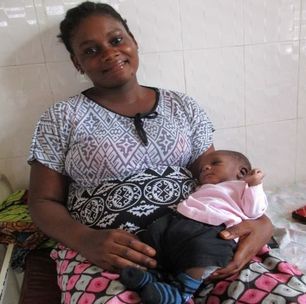
A family at Yenge Cllinic, DRC, where malaria prevention is a key activity.
  • In sub-Saharan Africa, there are currently 4.1 million people with AIDS who are in immediate need of life-saving anti-retroviral drugs. (Source:WTO)
  • There are 42 million people living with HIV and AIDS worldwide. It is a global emergency claiming approximately 8,000 lives every day in some of the poorest countries. (Source:Oxfam)
  • Approximately 40% of the world's population—mostly those living in the world's poorest countries—is at risk of contracting malaria. Malaria causes at least one million deaths annually

According to the World Health Organisation, some ground has been gained in the fight against preventable killer diseases, but the goal is not being universally met:

  • Fewer people are contracting HIV. New HIV infections have declined by 17% globally from 2001–2009.
  • Tuberculosis treatment is more successful. Existing cases of TB are declining, along with deaths among HIV-negative TB cases.
  • Indications are that 42 countries are on course to meet the MDG target for reducing malaria.

More people have safe drinking-water, but not enough have toilets.

SD network members and MDG #6

Centre médical la Bénédiction provides primary healthcare for the Lemba Imbu area.

Susila Dharma member projects around the world are working towards the achievement of this goal.

In the Democratic Republic of Congo, where malaria is the leading cause of morbidity and mortality and accounts for approximately 40% of child deaths, several SD clinics and health posts provide primary health care to thousands of people; indeed, they are sometimes the only source of health care in difficult-to-access places. Some (for example Yenge Médical) also provide impregnated mosquito nets to women who come to the clinic. Bed-net provision has been proved to be one of the most effective (and cost-effective) ways to prevent malaria.

Even rudimentary toilets work to prevent the spread of waterborne diseases.
Albadi School, DR Congo, 2009

Access to clean water is key in preventing water-borne diseases, which kill thousands of children every day. After the Mount Merapi volcanic eruption in 2010, Susila Dharma Indonesia worked in partnership with the Planet Water Foundation to deliver clean water to victims in five locations around the affected area. Also in Indonesia, Yayasan Usaha Mulia (YUM) is using health education in Central Kalimantan to improve health in the Bukit Batu subdistrict, as well as providing clean water provision and help with sanitation issues. With the support of SD Germany with funding from the German government, YUM implemented a 3-year anti-malaria programme in the sub-district that dramatically reduces the instances of the disease. The area reports minimal to no new infections as of 2011.

In the United States, the Quest Centre for Integrative Health has been serving the community infected with HIV since 1989, providing mental health and complimentary care for individuals living with the disease in Portland, Oregon, and it is the only organisation providing support services exclusively to HIV positive women and their children.

For more information on SD members’ work to achieve all the MDGs, please visit the SDIA website and in particular our newly-updated MDG matrix.

Are the Millennium Development Goals working?

Throughout our series on the MDGs, we have reported that some progress has been made towards achieving them but that there is still a long way to go. So, did the world leaders who were present at the Millennium Summit in 2000 really think they could end poverty by 2015? Are we going to make it?

There are many criticisms of the MDGs. One is that applying global targets—such as 100% school enrolment and universal access to AIDS treatment—to individual countries is a recipe for failure. If the targets are not met, people may become discouraged and decide that the fight against poverty is hopeless.

Planet Water works with SD Indonesia to provide clean water in Yogyakarta.

A lack of reliable data also makes some of the Goals difficult to measure. Some also say that it is simply not realistic to believe that existing power and market structures would allow the eradication of poverty in such a short time.

While these criticisms are probably valid, proponents of the Goals argue that deserved attention is brought to areas otherwise overlooked, such as gender rights and environmental sustainability. This is because the measurement of human development in the MDGs goes beyond income. Perhaps more importantly, they argue that the MDGs are justified because they provide a framework within which the international community can work together towards a common end. This increases the Developed World’s involvement in worldwide poverty reduction, and makes the MDGs the most broadly-supported poverty reduction targets ever set.

So even if the Goals are not all fully met, the beneficial effects of having established them should not be underestimated, and if they are achieved, world poverty will be cut by half, tens of millions of lives will be saved, and billions more people will have the opportunity to benefit from the global economy.

A win-win situation?


Top

Volunteering

Human Force partners with Anisha to host the fourth volunteer Camp

The next Human Force Camp for Social Change will be held in Anisha, near Bangalore in India in early July 2012.

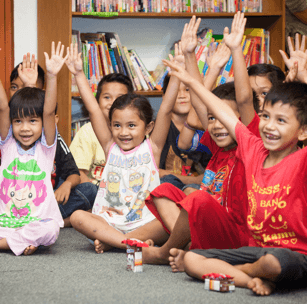
Human Force volunteers worked with local children at Usaha Mulia Abadi, Mexico, 2010.

The Human Force initiative, which has been going from strength to strength since its inception in 2009, is designed to bring a group of enthusiastic volunteers together with a project that needs them for a specific task or tasks for a short period. As well as working, volunteers get a chance to learn about development issues and about themselves. At the same time, projects benefit from volunteer labour and have the opportunity to raise their profile, locally, nationally and internationally.

This year camp participants will help with a food security survey, teach English to local schoolchildren and help to make a documentary film about the project! We encourage all to apply, and we particularly welcome applications from people with an interest in agriculture and/or experience in the above fields.

To apply to be a volunteer, please contact getinvolved@susiladharma.org, to make a donation info@susiladharma.org, and to read reports from previous camps visit our website.

Budesti English Language Summer School, mark two

Team Building at Budesti, Moldova, Summer 2011.

Applications are now welcome from willing volunteers!

Following the success of the first Summer School in English for disadvantaged children last year, Subud members in Budesti, Moldova, are launching the second edition, from 1 to 14 July 2012. This project is now a member of the SD network.

With the help of the lessons learned from last year’s valuable experience, international volunteer English teachers will help local English language teachers to enrich their knowledge of English and learn alternative teaching methods.

Although project organisers are ideally looking for experienced teachers of English (EFL or ESL), enthusiasm and the right attitude are just as important as a diploma!

Please contact getinvolved@susiladharma.org by 29 February 2012 if you are interested in volunteering or info@susiladharma.org if you want to support this project in Moldova. Read more about the project or about last year’s experience.


Top

News from the network

New chair for SD India

A.S. Samy

Susila Dharma India has started the New Year with a new chair! During the Subud India National Congress from 30 December to 1 January, Saminathan Arulsamy (Samy) was elected to take over from outgoing chair Lajpat Rao.

Samy is not new to SD work as he has already served a term as SD India chair. He is also the leader of an SD project in Tamil Nadu, the Centre for Culture and Development (CCD).

Lajpat writes:

I express my heartfelt gratitude to all National and International Susila Dharma brothers and sisters for their unstinting support, cooperation, help and encouragement during my tenure, and request that the same may please be extended to my successor.

Welcome back, Samy, and many thanks to Lajpat for all your hard work! From now on, please address all communication for SD India to samyindia@gmail.com.

News from SD Indonesia

The tenth edition of Susila Dharma Indonesia’s E-Newsletter is now out! Read about SD Indonesia’s activities during 2011.

SD Indonesia is currently supporting two new projects that are looking for funding for their activities.

The first proposal is for a Women's Capacity Training Program to eliminate domestic discrimination against women and children by Saudara Sejiwa Foundation (YSS) Family Consultation Learning Center in Ujung Berung, Bandung West Java. The grant request is for a total of $4,100 US.

The second proposal is for Training of Audio Assembling and Servicing for Youth Drop-Outs and Jobless in The City of Blitar (Java) started by Susila Bhakti Cooperative as an internal initiative of the local Subud Group. This Cooperative, which was founded on June 25, 2006, has undergone rapid growth. The request is for $4,250 US.

For more information about either of these projects, please contact Purnama (Chair of SD Indonesia): sdindo@susiladharma.or.id with a copy to rosanna@susiladharma.org.

A visit to La Casa Indigenista

Fashion show of participants' first projects at La Casa Indigenista, Tijuana, Mexico.

In Tijuana, a Mexican town on the border with the United States with a high level of poverty, there is a centre for homeless indigenous children and their families. La Casa Indigenista is headed by Marta Huerta, a Mexican woman with apparently unbounded compassion, and is supported by SD USA and members of Subud San Diego.

Subud member, Mikail Collins travels back and forth on a regular basis distributing clothes, blankets, small appliances and electronics donated by group members. On one of his visits last year he took Mardiyah Tarantino, who writes about her experience meeting different project participants:

“…Floresina… was thirty-four years old, had six children and no husband, and from what I had heard, she is the “Leader of the Pack”. It was she who first encouraged a microcredit deal and where the other women were reluctant to take responsibility for each other, she was able to envisage the benefits from such an arrangement and talked them into it. Now she is the one who encourages the use of sewing machines at the old La Casa site as well as here.

She explained to me that Marta had found a lady instructor who comes and not only teaches the ladies to sew, but also how to make patterns. […]

I remembered being taught in Home Economics how to run a sewing machine. I’d found it confusing and tedious at the time, and got away with a C- minus. So I had to admire these women who, with no connection to anything in the modern world, not even a toilet, quickly learned to wield these sleek, industrial machines.”

For more information about this project, visit the Subud San Diego website, watch the YouTube video or contact Rohana Loschiavo of the SD USA Media Committee: rohanalo@yahoo.com

Students at La Casa Indigenista, Tijuana, Mexico.


New member: Living Well, Dying Well

SDIA is pleased to welcome a new associate member! Living Well Dying Well is based in the UK and was created by Hermione Elliott and her team. The project aims to lighten peoples’ experience of death and dying and to accept it as a natural and normal part of life. This is done through:

  • Information, Education and Support;
  • Training lay people to become volunteers and/or informed companions, called Doulas for the Dying, to support people who are dying, their family and friends. They accompany the family practically, emotionally and spiritually, and work alongside professional medical and care services;
  • Running workshops with professional and lay members of the community;
  • Community development and awareness raising: eg holding events and facilitated conversations about death and dying with a wide range of people: old people, school children, churches, health professionals and families.

You can read more about the project on their website.


Top

From the office

SD presence at the Americas Gathering, Vancouver

From June 26 to July 3, Subud members from the Americas (Zones 7, 8 and 9) and beyond will be gathering at the University of British Columbia on the shores of the Pacific Ocean immediately following the World Subud Council Meeting. There is an active planning team in place gathering information for an exciting program for Subud members and the public — arts, culture enterprise, humanitarian service and our spiritual practice. We hope to have a strong Susila Dharma program of interest to attendees of all ages.

For more information about the event, visit the website!

2012 member’s meeting to be held in the United Kingdom

The venue for SDIA's Annual General Meeting is Malvern, UK.

This year SDIA’s members networking meeting and AGM will be held in Great Malvern, UK, from the 19th to the 26th of August, alongside the Subud Britain National Congress.

As always an action-packed programme will be proposed and we hope that many of you will be present to join in our meetings, presentations and workshops!

More information to come.

GHFP grants funds for information-gathering

Hillel Natanson

The Guerrand-Hermes Foundation for Peace (GHFP) has generously provided a grant to SDIA office member Hillel Natanson to document the history and activities of SDIA projects. This effort will include recording the stories (both audio and video) of those who have founded projects, those who work in them, and those who benefit from them. Hillel will also be taking photos to enrich the newly evolving SDIA photo database.

To make the initiative sustainable, he will offer training so that such materials can be produced in the future by the projects themselves to document and promote their work.

Thank you GHFP!


Top

Another way to Contribute to SDIA

Help increase SDIA’s visibility on Google™ and other search engines by including a link to SDIA’s website (http://susiladharma.org) on your web site.

Receive the Susila Dharma eNews by email !

Sign up to receive the Susila Dharma Network eNews in French, Spanish or English by email.