
SDIA Home

E-NEWS 2007
October | November | December
E-NEWS 2008
Feb | March | April | May

Susila Dharma International Network eNews

No. 47— May 2008

Hello fans of Susila Dharma!

In the May issue of the SD Network eNews we are sending you:

News from the Network

  1. Photographer:
    Karine Savard, 2008
    Reports from Lawrence Fryer’s visit to India >>
  2. South India Organizations Examine the MDGs >>
  3. Beirut Peace ceremony and tree planting >>
  4. Evaluation of YUM Cipanas Children’s Village >>
  5. Bina Cita Utama School Update >>
  6. SD Serbia signs agreement with UNICEF >>
  7. SD Netherlands supports Argentine Indigenous community >>
  8. More on the UN and Subud >>

Other interesting information

  1. First Barefoot Women Engineers >>
  2. Communications and Training resources >>
  3. Grants available for indigenous community projects >>

From the Office

  1. Endowment Fund >>
  2. Current activities >>
  3. New Web Site, New Server >>

Thank you for positive feedback which is rewarding for the three of us behind the scenes: “What an amazing newsletter!!! So much to read and so much good news. The links to the various reports are so easy to follow, the photos add an extra dimension to the reports and it is all a great achievement.” The content of the eNews is based on the information we receive from projects and SD nationals, so please keep it coming into the office.

With warm wishes from the office.


Top

SD Network News

1. Visit to India:

Lawrence Fryer, SD Germany and Director of SDIA, recently spent a few weeks in India with colleague Baerbel Grimm.

Lawrence Fryer on left with members of
SD Germany team, Lewes, 2007

During this journey we had the opportunity to visit and discuss all the SD projects in India: Mithra, Anisha, Sradha, Atam Deep and Center for Culture and Development (CCD.) We were most impressed by what we have seen and feel that Susila Dharma can be very proud of these projects, all of which deserve to be supported.

In addition, we have had meetings with two other projects, Care Council (CC) and Nava Jeevan Trust (NJT), which SD Germany has in the past been supporting in a modest way. SD India is in the process of deciding whether or not to invite CC and NJT to become part of the SD India network. After our visits to the projects we had a meeting with SD India to share our impressions.

Finally we were privileged to participate on a meeting of South Indian NGO’s on the subject of the Millennium Development Goals (MDG) with the aim of writing an alternative paper to the official Indian statement from the perspective of NGO’s working at the grassroots level.


Top

A. Mithra Foundation

Mithra Foundation has been supported for many years by Susila Dharma members and is now a thriving project with many programs that serve primarily the people living in 9 slums around Bangalore:

  • Pre-School: Running classes, teacher training, food, mothers' meetings, health
  • Field Work program: Child labour, Sponsorships for children, disability, community programs, supplementary education, summer camp
  • Women Empowerment: savings, trainings, meetings, microcredit, women’s day
  • Alternative School / Vocational Training Centre: running a school for 230 children and Vocational Training Centre, material, maintenance, salaries, food
  • Human Rights: Trainings, monitoring, publication, impact study, interschool events, support to schools, Government collaboration
  • Administration: Auditing, Travels, Salary, Office Expenses

SD Germany sponsored an evaluation of Mithra School’s performance, identifying strengths and weaknesses so as to improve the school’s operation. The evaluation, which was included as part of the BMZ (Germany government) grant to Mithra, made ten recommendations to assist school management.

As things stand at the moment (May 2008) Mithra has firm pledges of about 46,800 Euros and is still in need of about 70,000 Euros (110,000 US$). Lawrence Fryer is appealing to SD organizations and individuals who have supported Mithra in the past to continue until the project can take measures to develop a more stable local funding base.

The Mithra Foundation evaluation report and 2008/2009 budget is available from the SDIA office.

If you are interested, please contact SDIA office or Lawrence, <tdlfryer[AT]arcor.de>

Read a more detailed Mithra Report here

and full evaluation report here


Top

B. Anisha Foundation

Through its Urban Program in Bangalore Anisha offers:

  • Pre-Primary Classes: running of classes, teacher training, food
  • Supplementary Education: support for educational needs of child labourers, educational tours, supplementary education, summer camp
  • Sponsorship Program: to help children from the pre-primary classes who have been admitted to formal schools
  • Women Empowerment: savings, trainings, meetings, Microcredit, women’s day
  • Health: Medical Support
  • Housing Project: a project to build 9 houses in Vandimode

Since 2006 Anisha has been working to improve the livelihood conditions of small and marginalised farmers in a very poor region about 150 kms south of Bangalore. The project area, Grampanchayat Martahalli, consists of 20 villages with a population of about 13,000. In 2007 a pilot project, financed by Susila Dharma, has been carried out in a limited cluster of 5 villages in order to gain experience with a number of interlinked interventions before continuing in the larger surrounding area. The plan now is to make a 4 year project proposal for BMZ (German Government).

Anisha annual report can be read here

Lawrence's full Anisha report here


Top

C. Other Indian Projects

The Atam Deep Model Farm

Atam Deep is a family foundation of the Aurora family. Professor Gurdip Aurora has vast experience and interest in organic farming and in particular with the permacultural methods of Bill Morrison. It has become possible now to create a model farm on a small (1/4 acre) piece of land in the village of Eraguntapalya, only about 1 km from the SRADHA training centre. The idea is to demonstrate that even from a small plot of land intelligent management of the resources can achieve self-sufficiency in food.

SRADHA Project

Sradha is presently working in 9 villages with a range of programs to provide support for school children, youth with vocational training, women’s Microcredit program and toilet building program together with the government.

Centre for Culture and Development

CCD, based near Madurai under the leadership of Samy, has a number of different activities. Kalaigramam training centre has been built with a bamboo structure covered by palm-leafs funded by SD Britain. The centre is on a plot of 9 acres of dry-land which Samy has bought and on which he plans to create a model organic farm. 200 children receive supplementary education in evening classes. CCD is encouraging Dalit culture, in particular drumming, as a way to strengthen their self-esteem. Awareness training and micro-finance through women’s groups and working with an organic farmers’ association to promote organic farming practices.


Top

2. South Indian Civil Society Meeting

Inspired by Joe Rosario’s participation in a UN Human Rights meeting in Geneva last year, Mithra Foundation organized a one-day consultative meeting in Bangalore on March 30th to examine the progress of the United Nations’ eight Millennium Development Goals (MDGs) in South India, to analyze the Indian government’s commitment to achieving them, and to produce a paper that would present the meeting’s results with facts and figures. Seventeen NGO leaders selected from the States of Karnataka, Andhra Pradesh, Tamil Nadu and Kerala attended. Lawrence Fryer and Baerbel Grimm from SD-Germany were the special invitees for the consultation.

Read full report


Top

3. Beirut Lebanon Peace Ceremony

Alexandra Asseilly (UK) the founder of the Garden of Forgiveness in Beirut, sent us this news item recently:

On April 13 following a three hour peace march to the Centre of Beirut, a presentation from different political factions, leading representatives of all the 18 different religious communities in Lebanon together said the same prayer for peace which included asking for forgiveness one from the other. Finally, we planted an olive tree in the Garden of Forgiveness, Hadiqat as-Samah; and below is a prayer I wrote for it.

A Prayer in the Garden of Forgiveness
Hadiqat as-Samah

In this ancient place of over 2,000 years of human living, three generations of Lebanese of different faiths and histories, meet today in the name of Unity and Hope.

We plant this olive tree in the memory of the thousands of those who died, disappeared or suffered as a result of the war which began this day 33 years ago and of so many who still suffer its effects today.

We pray that the pain in the memory of this war will be transformed through compassion and forgiveness and that our children and their children and future generations will live in peace. Our Unity is our Salvation.


Top

4. Evaluation report on YUM’s Children’s Village

Daisy MacDonald (UK) spent some time in Indonesia on behalf of SDIA and the Blond Trust to conduct an evaluation of the Children’s Village (Desa Anak Anak). This long time Susila Dharma project in Cipanas near Jakarta has been a showcase of Yayasan Usuha Mulia (YUM) for many years. Daisy spent a total of 3 weeks with YUM managers and staff and the children in the project. The SD network would like to sincerely thank Daisy MacDonald for an excellent and very detailed evaluation report. Thanks to YUM for their on-going commitment to learning and excellence and their willingness to fully share the results of this evaluation with us all and to the Blond Trust for its conceptual and financial support of this evaluation.

One of the Goals set for SDIA by its members has been to develop the capacity of the network to carry out and share project evaluations. We think that this one is an excellent example of how to support our SD projects in learning from and sharing their experience, and will endeavour to support other projects to carry out detailed evaluation studies and incorporate their lessons and recommendations into their work.

To read full evaluation report


Top

5. Bina Cita Utama School Update

Since the recent visioning meeting in Kalimantan in March, things have been moving forward for the school based at Rungan Sari. Michael van der Matten (UK) has been appointed as administrator for the school and will spend part of each year in Kalimantan. Members of Subud Japan have raised $30,000 US to purchase a bus that is needed for the school. Bardolf Paul writes:

The objectives and beliefs of SDIA are completely congruent with those of Bina Cita Utama School (BCU), which in its educational programs seeks to nurture individuality, self-worth, and a sense of the spiritual, enabling children to become well-rounded adults who will contribute positively to their communities and the greater world. This is encapsulated in the name “Bina Cita Utama” which means: “To nurture dreams, ideals, hopes and ambitions that are noble, or of the highest standing.” Given the close congruence with the aims and objectives of Susila Dharma, and the special opportunity that exists for Subud to influence the growth and development of Kalimantan, it makes a lot of sense for the SDI network to support the ground-breaking efforts of Bina Cita Utama School in whatever way it can.

See Bardolf’s full article here.


Top

6. SD Serbia UNICEF Project

Josefina Bačikin, chair of SD Serbia reports that an agreement has been signed with UNICEF to engage in the School without Violence Project and that $4050 was raised from SD Norway and other sources. Subud member Goca Nikolic will get a special training for her involvement in the project. With the dramatic drop in value of the US$, the project still needs to raise $1300 in 2008.


Top

7. SD Netherlands and Tucuman Project in Argentina

Lawrence Leetz (Holland) recently visited Tucuman, an indigenous community in northern Argentina supported by SD Netherlands and sends this report

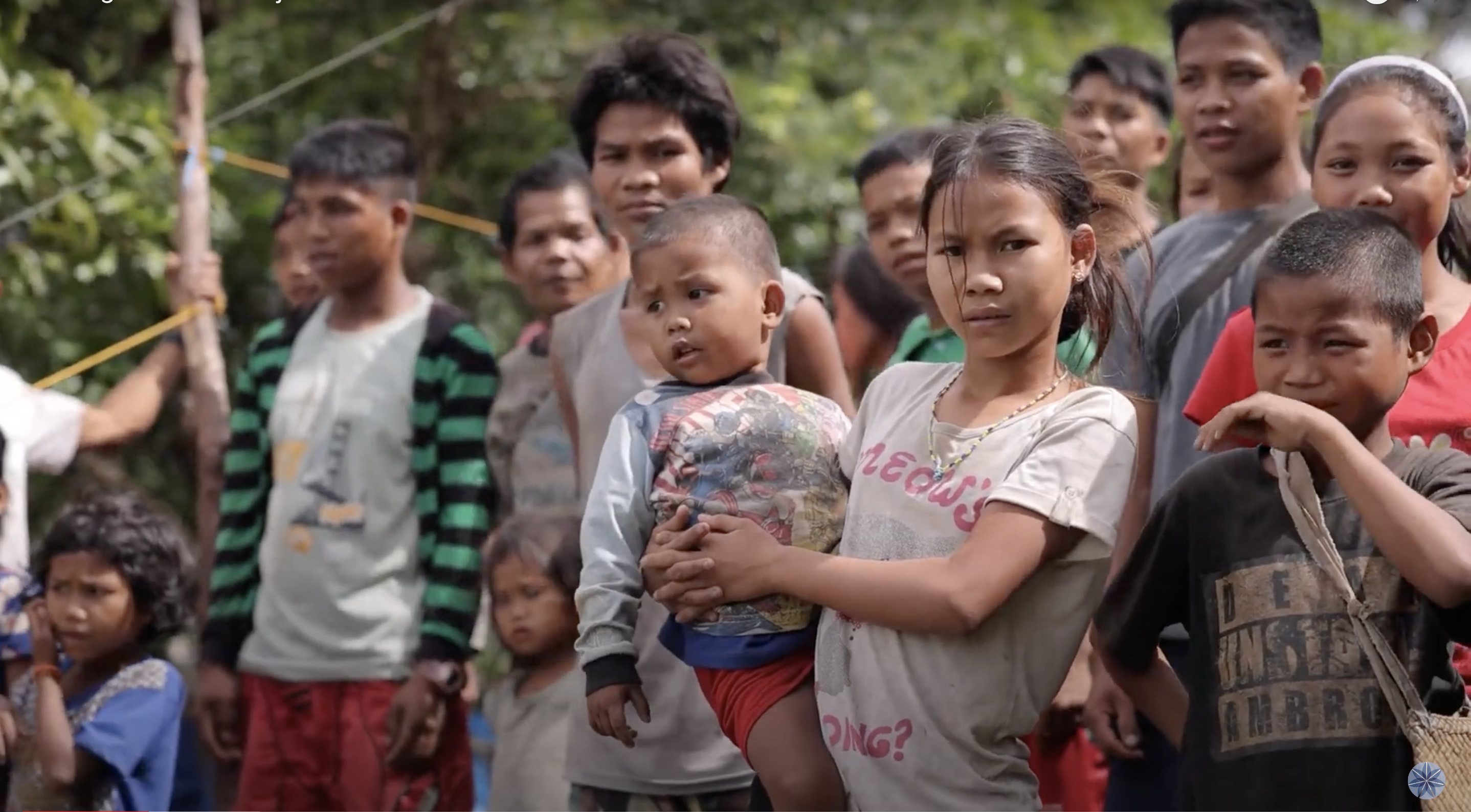
Some 5 years ago SD Netherlands had donated 4 hectares of land to a group of indigenous farmers. Life was hard, the winters were extra cold and the landowners were giving them a hard time. With these 4 hectares added to the 8 hectares they already had they could cultivate more crops. Now they rent more land generating 20 extra jobs for people outside the Cooperative. They are doing so well now that they have managed to get access to the Central Market where they sell their vegetables. Living standards are improving slowly and that gives them the opportunity to execute their program of "Integral Development" more broadly. These farmers of the Valley of Tafi are also continuously fighting against multinationals that get concessions to start all kinds of polluting industries. They work very hard the whole year round and Marcos Pastrana, our coordinator there, is happy that everyone participates in generating new ideas to develop and execute the program of integral development.


Top

8. God with an Action Plan

In March Raphael Bate, Solen Gratiet and Katherine Carré attended a UN meeting in Geneva which was described in Solen’s report in the last issue. Raphael has an interesting and passionate take on our relationship as Subud members with the UN:

The United Nations Declaration of Human Rights was a response against the horrors of World War Two. A Frenchman, Rene Cassin, authored the Declaration of the Universal Rights of Man on 10 December 1948 in Geneva. To me the UN is like God with an action plan, a clip board, microscope and democracy. By looking, listening, communicating, measuring, computing and analysing, guidelines are produced and hopefully carried out and then monitored. Compassion for all attempted democratically! I think that a fully human life force is the goal of the UN. Compliance with the rights declared relies on the good will of individual states. However, this process is tortuous, mind numbing, meticulous, non autocratic and at times dangerous. It is an incredible challenge and the only one worth taking if we are to change the world for the better.

We in Subud are supposed to be getting in touch with the love of God and receiving compassion through the latihan. If we do nothing in the world with it; it is like having electricity' but just allowing your battery to leak away without producing heat and light. By allowing this intrinsic compassion into the world with intelligence, balance, and guided action, the sins of the world can be eradicated. In what else should we Subudians be involved?

“The darkness of violence can only be enlightened by compassion.
We therefore need to promote compassion with great effort.”


—Dalai Lama

Read Raphael's complete article here.


Top

Of Interest to Members

1. The First Women Barefoot Solar Engineers in the World!

The Barefoot College movement is unique and different is its approach: it has rejected the outside professionals from the formal education system. It believes instead in identifying and using the skills, knowledge and practical experience available among ordinary people in the community itself to provide for basic needs (drinking water, health, education, employment, fuel and fodder.

This 10-minute video tells the story of the first women barefoot solar engineers in the world. “This is a true story about ordinary heroes. A story of very simple women who have made an extraordinary difference in their own community…”

Go to the Barefoot College website.


Top

2. The Communication Initiative partnership

“...where communication and media are central to social and economic development...”

http://www.comminit.com

3. 2008 Grants available for indigenous peoples’ organizations and their communities

The Indigenous Peoples Assistance Facility invites applications from indigenous peoples’ organizations and communities, as well as organizations that work with them, for grants to fund projects, innovative approaches and partnerships that promote the development of indigenous peoples and help them fulfil their aspirations. Grants range from US$10,000 to US$30,000.


Top

From the Office

1. SDIA Endowment Fund

Are you interested in leaving a legacy that will support humanitarian work for long into the future? If so, consider making a donation or designating a bequest in your will to the Susila Dharma International Endowment Fund.

The SDI Endowment Fund was set up in 2000 to provide long term funding for SDI’s ongoing operations so that SDI can continue to support the many worthwhile projects run by SDI members. Donations to the Fund become part of the Fund’s asset base and only the income generated by these assets is used. The Fund’s assets are managed by Morgan Stanley Investment Advisors and the allocation of income from the Fund is administered by a committee of SDI’s board of directors.

For more information contact SDIA at info@susiladharma.org


Top

2. Office Activities:

  • 2007 SDIA Annual Report and Financial Statements are being prepared;
  • Conference planning for the Meeting in Colombia in July;
  • Enterprise Sponsorship Program is under development;
  • 2007 United Nations Participation Report is being prepared for WSA;
  • Themes emerging from the analysis of the Governance and Development Survey of SD projects are being prepared.

3. Website Changes

We are in the process of making an extensive upgrade to our website. Our new format will be completely searchable, able to host blogs, and have much more interactive capability. We hope that this will provide the communications infrastructure that is needed by Susila Dharma's global Network.

You may find that some of the links in this edition of the eNews cease to work after the middle of the month. Please bare with us during period and remember that we are making a transfer to a new server and a completely new web structure. If you have any difficulties, go to our homepage (http://susiladharma.org) and there you will find a link to an updated version of the eNews in an online format which will have all the links in working order.

Top